

Storm damage roof repair can become an unexpected expense for Australian homeowners after heavy rain, hail, strong winds or falling branches damage their roofing. Whether you have cracked tiles, damaged metal sheets or water entering your ceiling, one of the first questions is whether your home insurance will cover the repairs.
The good news is that many Australian home building insurance policies include cover for certain types of storm damage. However, approval is not automatic. The outcome depends on your policy, what caused the damage and whether existing maintenance problems contributed to the condition of the roof.
For homeowners in Sydney and surrounding areas, understanding the insurance process can help reduce confusion when arranging inspections, emergency protection and permanent roofing repairs.
This guide explains common insurance considerations, how to document storm damage, what affects repair costs and how to choose a suitable roofing contractor.
Does Home Insurance Cover Storm-Damaged Roofs?
When Storm Damage Roof Repair May Be Covered
Many Australian home building insurance policies provide cover for sudden damage caused by insured weather events, including strong winds, hail and heavy rainfall. For example, a storm that dislodges roof tiles, damages metal roofing or causes a tree branch to fall onto a house may result in damage that falls within the policy’s storm coverage.
However, the insurer must assess the circumstances before approving storm damage roof repair. The policy may cover repairs to damaged roofing materials and certain resulting water damage, depending on its terms and exclusions.
Coverage also depends on whether the property was insured when the event occurred and whether the reported damage can be linked to an insured event.
Homeowners should avoid assuming that every leak discovered after heavy rain qualifies for an insurance-funded repair.
Understanding Roofing Insurance Australia Policies
When researching roofing insurance australia, it is important to understand that roof damage is generally considered under a home building insurance policy rather than a separate standard roofing insurance product.
Start by reviewing your Product Disclosure Statement (PDS), policy schedule and certificate of insurance. These documents explain the insured events, exclusions, excesses and any applicable claim conditions.
Some policies may also contain specific requirements relating to maintenance, repairs or damage that develops gradually.
If the wording is unclear, contact your insurer and ask whether the reported storm damage falls within your coverage. Request clarification about the excess, claim process and whether you can select your own roofing contractor.
Understanding these conditions before authorising repairs can help prevent unexpected expenses.
What Roof Damage Can Affect an Insurance Claim?
Recognising Hail, Wind and Rain-Related Roof Damage
Storms can affect different roofing materials in different ways. Strong winds may lift or displace roof tiles, loosen metal sheets or damage flashing, while hail may cause cracking, dents or other impact-related damage.
Heavy rainfall can expose weaknesses around roof penetrations, joints and drainage systems. However, finding water inside a property does not automatically establish that the storm caused the underlying roofing defect.
Signs such as ceiling stains, damp insulation, displaced roofing materials and water dripping during rainfall should be recorded.
For storm damage roof repair, a professional assessment can help identify affected components, the likely source of water entry and whether further investigation is required.
Homeowners should inspect visible damage only from safe locations. Climbing onto a wet or damaged roof can create serious injury risks.
Why Existing Roof Problems Can Affect Coverage
One of the most common insurance concerns is whether damage resulted from the storm or from deterioration that existed beforehand.
Roof tiles can crack over time, flashing can deteriorate and metal roofing may develop corrosion. Blocked gutters and poorly maintained drainage may also contribute to water entering a property.
If an insurer determines that existing defects or inadequate maintenance significantly contributed to the damage, it may reduce or decline payment under the relevant policy conditions.
However, an older roof is not automatically excluded from insurance. The cause of damage and the wording of the policy remain important.
For storm damage roof repair, maintenance records, earlier inspection reports and photographs may help establish the condition of the roof before the event.
A professional roofing assessment may also help distinguish recent damage from longer-term deterioration.
How to Lodge a Roof Insurance Claim in Australia
Documenting Damage Before Requesting Repairs
After a storm, prioritise safety before gathering evidence. Stay away from unstable roofing materials, fallen powerlines and areas where water may have affected electrical installations.
Once it is safe, photograph visible damage from the ground or another secure location. Record any internal leaks, damaged ceilings and affected belongings without entering unsafe areas.
It is also useful to note the date of the storm, when the damage was first noticed and whether water entry has continued.
Keep relevant maintenance records, previous repair invoices and professional inspection reports.
If storm damage roof repair requires an assessment, ask whether the roofing contractor can provide written findings describing the affected components and recommended work.
Clear documentation can assist the insurer, although photographs and reports do not guarantee claim approval.
What Happens After You Contact Your Insurer?
Contact your insurance provider as soon as practical, even if the full extent of the damage is not yet known.
The insurer will generally explain how to lodge a claim and what information is required. Depending on the circumstances, it may appoint an assessor, roofing contractor or other specialist to inspect the property.
The assessment may consider the likely cause of damage, the condition of the roofing materials and the repairs required.
Homeowners should ask for a claim reference number and clarification about the next steps, including whether any repair work needs prior approval.
If additional damage is discovered during the assessment, inform the insurer rather than assuming it is automatically included in the original repair scope.
Maintaining clear communication throughout the process can help avoid misunderstandings about the proposed work.
Emergency Roof Repairs and Temporary Protection
When Emergency Roof Repair Sydney Services Are Needed
Some roofing problems require attention before the insurance assessment is completed.
Significant water entry, unstable roof materials and damage that exposes occupied areas to further hazards may require urgent assistance.
Homeowners searching for emergency roof repair sydney services should first consider whether the property is safe to occupy.
During a storm or flood emergency in NSW, the State Emergency Service can be contacted on 132 500. For life-threatening situations, call 000.
Avoid attempting roof repairs yourself, particularly during severe weather or when roofing materials may be unstable.
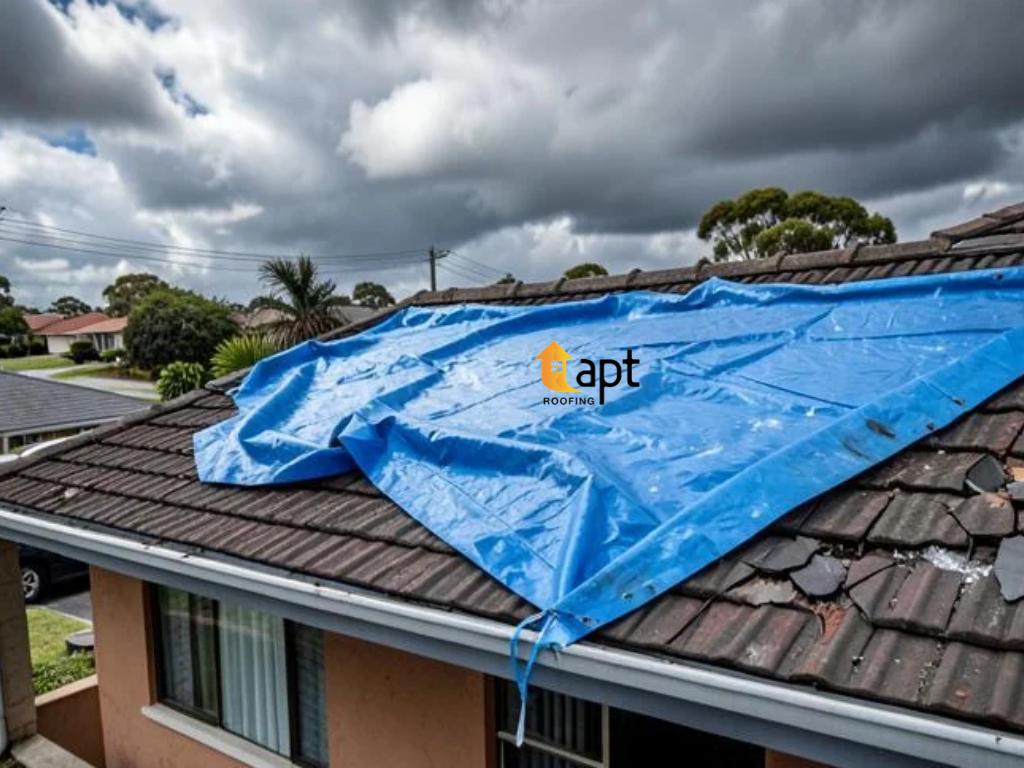
Where storm damage roof repair cannot begin immediately, temporary protection may help reduce further exposure. However, such measures should be arranged by appropriately equipped personnel.
Temporary Repairs Versus Permanent Storm Damage Roof Repair
Temporary roof protection and permanent roofing repairs serve different purposes.
Emergency make-safe work may involve securing loose materials or professionally installing a tarpaulin to limit further water entry. These measures are intended to manage immediate hazards rather than permanently restore the roof.
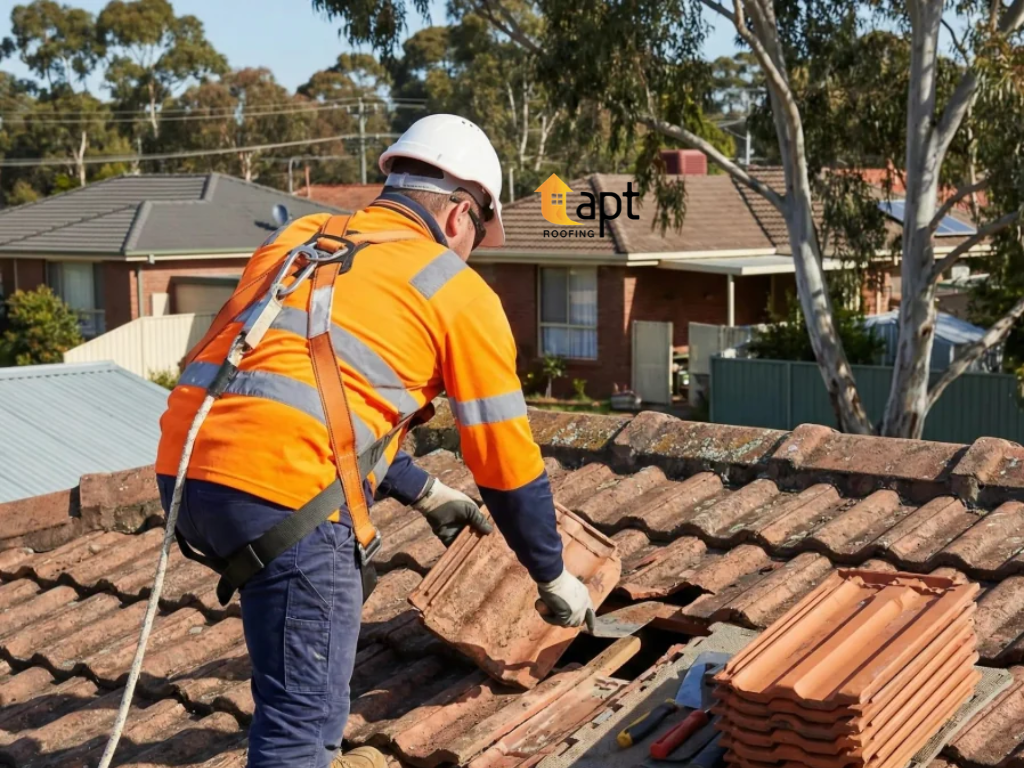
Permanent storm damage roof repair may involve replacing damaged tiles, repairing flashing, fixing metal roofing or addressing other affected components identified during an inspection.
Homeowners should contact their insurer before authorising building work, including emergency repairs, wherever possible.
If urgent action is necessary to protect people or prevent further damage, prioritise safety, retain photographs and invoices, and notify the insurer promptly.
Do not assume temporary repairs or permanent work will automatically be reimbursed without checking the relevant policy conditions.
Choosing a Qualified Roofer for Insurance Repairs

What to Look for in Residential Roofing Sydney Contractors
Choosing the right roofing contractor is important when damage affects the safety or condition of your home.
When comparing residential roofing sydney providers, check whether the contractor holds the appropriate NSW licence for the proposed work. Roof tiling and roof plumbing are different work categories, and the required authorisation depends on the type and value of the project.
Ask about experience with tiled or metal roofs, storm-related repairs and the preparation of clear repair quotations.
Homeowner Roofing services may include roof inspections, leak repairs, restoration or replacement, depending on the property’s condition.
APT Roofing provides residential roofing, roof repair and insurance-related roofing services across its service areas. Homeowners can explore its Home Owner Roofing services when considering suitable roofing support.
Before engaging any contractor, confirm the proposed service, relevant qualifications and arrangements required by your insurer.
Comparing Roof Inspection Reports and Repair Quotes
A roofing quotation should make it clear what work is being proposed and why it is necessary.
For storm damage roof repair, useful information may include the location of affected materials, the recommended repair method, replacement materials, access requirements and whether any temporary protection is needed.
A detailed quotation can help homeowners understand the proposed scope and discuss it with their insurer.
It is also important to distinguish repairs associated with the insured event from unrelated maintenance or improvements.
For example, an insurer may approve replacement of specific storm-damaged components without agreeing to replace the entire roof.
Ask the contractor to explain any additional recommended work and whether it falls outside the insurer’s approved scope.
Understanding Repair Costs and Insurance Decisions
What Affects Roof Leak Repair Cost After a Storm?
The roof leak repair cost after a storm depends on the source of the leak, the extent of the damage and the work required to restore the affected area.
Replacing a small number of damaged tiles may involve different labour and material requirements from repairing extensive metal roofing damage or replacing deteriorated flashing.
Roof height, access, safety equipment, replacement material availability and the need for additional investigation can also influence the final quotation.
Water may travel along roof components before becoming visible inside the property, so the location of a ceiling stain does not always identify the original entry point.
A professional assessment is therefore important when planning storm damage roof repair.
Homeowners should request a clear breakdown of the proposed work and confirm which costs, if any, have been approved by their insurer.
What if Your Insurance Claim Is Partially Approved or Rejected?
An insurer may approve a claim, approve only part of the requested work or decline coverage based on the policy and assessment findings.
For example, the insurer might accept that certain tiles were damaged during a storm but determine that other roofing problems relate to earlier deterioration.
If you disagree with the outcome, request a written explanation and copies of the relevant assessment findings.
Review the decision against your policy and consider obtaining independent professional evidence where appropriate.
You can then ask the insurer to review the decision through its internal dispute resolution process.
If the issue remains unresolved, the Australian Financial Complaints Authority (AFCA) may be able to consider an eligible complaint.
Understanding the reasons for the decision can help you assess whether additional evidence or further action is appropriate.
Planning Repairs and Reducing Future Storm Risks
Organising Storm Damage Roof Repair After Claim Approval
Once your insurance claim has been assessed, confirm the approved scope before arranging permanent work.
Depending on your policy and settlement arrangements, the insurer may organise repairs through an appointed contractor, allow you to select a suitable roofer or offer a cash settlement.
Before proceeding, establish who is responsible for arranging the work, paying any excess and approving changes to the repair scope.
If the contractor discovers additional problems, notify the insurer before authorising extra work that you expect the policy to cover.
For storm damage roof repair, retain quotations, invoices, inspection reports and relevant warranty documentation.
APT Roofing offers roof repairs, roof replacement and insurance-related roofing services. Homeowners can review its Insurance Roofing services to understand the available roofing support.
However, insurance coverage and settlement decisions remain the responsibility of the insurer.
Maintaining Your Roof and Preparing for Future Storms
Once repairs are completed, ongoing maintenance can help homeowners identify developing roof problems before they become more serious.
Damaged tiles, deteriorated flashing, loose ridge capping and blocked drainage should be assessed and addressed appropriately.
Homeowners should also monitor signs of water entry, particularly after heavy rainfall or strong winds.
Professional inspections may be useful where the roof has experienced severe weather or visible deterioration.
However, routine maintenance cannot prevent every type of storm damage or guarantee future insurance coverage.
If you notice roofing damage or unexplained leaks, seek professional advice before the problem worsens.
Homeowners can contact APT Roofing to discuss roof repair requirements and arrange an enquiry about suitable services.
Before commissioning work, review your insurance arrangements and confirm any necessary approvals.
Understanding your policy, documenting damage and choosing a suitably qualified roofer can help you navigate storm damage roof repair with greater confidence.