

A water stain on the ceiling tells you that moisture has entered the building. However, it does not always tell you where the roof has failed.
Water can enter through damaged tiles, flashing, roof penetrations or valleys. Problems with gutters and drainage can also contribute to water entering areas where it should not.
That makes diagnosis an important first step when arranging Roof Repair in St George and Sutherland Shire.
NSW weather can also place roofs under pressure. NSW SES says severe thunderstorms can bring strong winds, hail and heavy rain. These conditions can damage roofs and other building elements.
Rather than guessing at the cause, it helps to understand the main areas a roofing professional may investigate.
Follow the signs inside the home first
Start with what you can see safely from inside the property.
A ceiling stain may appear directly below a roof fault, but that is not guaranteed. Water can enter higher on the roof and move along roofing components before reaching the ceiling.
Look at the shape and location of the stain. Note whether it appears close to an external wall, chimney, skylight or roof junction.
You may also notice bubbling paint, damp plaster, discolouration or a musty area. These signs can help a roofer narrow down the problem.
Avoid climbing onto a wet or damaged roof yourself. Storm damage can weaken areas that still look normal from ground level. NSW SES recommends staying clear when a roof has been struck by large debris because structural damage may not always be obvious.
Photos taken safely from inside the home can still be useful. Record the affected rooms and the approximate location of each stain.
Consider when and how the leak appears
Timing can provide useful clues.
A leak that starts only during heavy wind-driven rain may have a different cause from one that appears during every period of rain.
Likewise, a problem that develops after prolonged rainfall may point towards drainage or water build-up.
Think about what happened before the leak started.
Was there a recent storm? Has anyone installed an antenna, solar equipment or skylight? Did the roof recently receive repair work? Have gutters overflowed during rain?
This information does not provide a final diagnosis. However, it gives the roofer useful context.
Homeowners should also note whether the problem is getting worse.
A small stain that remains unchanged is different from active dripping or a ceiling that begins to sag. If there is a risk involving electricity, structural damage or significant water entry, keep clear of the affected area and seek appropriate help.
Check Whether Roof Tiles or Roof Sheets Are Involved
Tile roofs can develop local problems in several areas.
Individual tiles may crack or move. Ridge capping and pointing can also deteriorate over time. Storm debris or previous work may damage a small section while the rest of the roof remains sound.
From ground level, you may notice an obviously displaced or broken tile.
However, not every problem is easy to see.
Water may enter through a small crack or around a roof detail that looks normal from below. A professional inspection can help determine whether the repair only involves a few tiles or whether surrounding areas also need attention.
Avoid assuming that replacing the tile directly above the ceiling stain will solve the problem.
The roofer should inspect nearby roof areas and consider the route water may have taken.
A targeted repair often makes sense when the fault is isolated and the surrounding roof remains serviceable.
Review metal roofing for loose or damaged areas
Metal roofs have different potential leak points.
A roofing professional may inspect sheets, screws, fasteners, laps, flashing and other junctions.
Movement or deterioration around fixings can sometimes allow water to enter. Damage to the sheet itself also needs attention.
The inspection should consider the whole area around the suspected leak.
Simply applying sealant to the first visible gap may not address the real cause.
Roof plumbing work in NSW covers areas including metal roof coverings, guttering, downpipes and flashing. NSW Government guidance sets licensing requirements for this type of work.
For this reason, homeowners should use an appropriately qualified contractor for relevant roofing work.
Pay Close Attention to Flashing and Roof Penetrations

Inspect the areas around chimneys and skylights
Every opening through a roof creates an area that needs careful weatherproofing.
Common examples include chimneys, skylights, vents and other roof penetrations.
Flashing directs water away from the joint between the roof and these features.
If flashing moves, corrodes, separates or was installed incorrectly, water may find a path inside.
The problem can become difficult to diagnose because the visible stain may appear some distance from the penetration.
A roofer should examine both the penetration and the surrounding roof covering.
The correct repair depends on the fault. Some problems may need flashing repairs rather than sealant alone.
Homeowners should also mention any recent work around these features. Even unrelated work on a roof can help explain when the leak first appeared.
Check where different roof sections meet
Roof junctions deserve the same attention.
Areas where one roof plane meets another must manage water effectively. Changes in roof height, adjoining walls and extensions can create more complex junctions.
These areas may use flashing or other weatherproofing details.
Leaks can develop when materials deteriorate or when later building work changes how water moves across the roof.
This is why a professional inspection should consider the roof design rather than looking only for obvious holes.
Photographs and a written repair scope can be valuable when a junction requires more than a small fix.
They also make it easier for homeowners to understand what the contractor plans to repair.
Do Not Overlook Valleys, Gutters and Downpipes
A roof valley sits where two roof slopes meet.
Rain from both sides moves towards the valley before travelling towards the gutter. This means valleys can handle a significant amount of water during rain.
Problems may develop if the valley becomes damaged, obstructed or unable to drain correctly.
Debris can also restrict water movement.
A roofer inspecting a leak near a valley should check the valley itself and the nearby roofing materials.
The repair may involve clearing an obstruction, repairing surrounding tiles or addressing the valley material.
The correct solution depends on what the inspection finds.
Avoid repeatedly patching an internal ceiling stain without checking the roof above it. Interior repairs will not stop water entering through an unresolved roof fault.
Look for drainage problems before blaming the roof covering
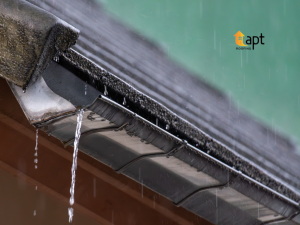
Gutters and downpipes form part of the roof drainage system.
When drainage does not work correctly, water may overflow or move towards areas that normally stay dry.
Blocked gutters are one possible cause. Damage, poor alignment or restricted downpipes may also affect water flow.
APT Roofing’s current service information includes guttering and downpipes alongside roof repairs and other roofing work.
This is useful because some apparent roof leaks can involve more than the roof covering itself.
A complete inspection should consider how rainwater leaves the roof.
Homeowners searching for roof repairs st george should ask whether the inspection includes drainage areas when the symptoms suggest overflowing gutters or water close to the roof edge.
Decide Whether You Need a Local Repair or Wider Roofing Work

Choose a targeted repair for an isolated fault
Not every leak means the whole roof needs major work.
A localised problem may involve one damaged tile, a small flashing fault or another specific defect.
When the surrounding roof remains in suitable condition, repairing the identified fault may be the sensible approach.
Ask the roofer to explain exactly what has failed.
The quotation should identify the damaged area, proposed work and materials where practical.
You should also understand whether the repair addresses the cause or only provides a temporary measure.
People comparing a roof repair service in sydney can benefit from asking this question directly.
A clear diagnosis makes it easier to understand why one contractor recommends a small repair while another proposes more extensive work.
Consider broader work when problems appear across the roof
Sometimes the inspection finds more than one fault.
There may be widespread damaged tiles, repeated leaking areas or ageing components across several sections.
In this situation, continuing with isolated patches may not provide the best long-term approach.
The homeowner may need to compare repair, restoration or replacement.
These options are not interchangeable.
A repair addresses specific faults. A restoration involves broader work to improve an existing roof. Replacement involves removing and replacing significant roofing materials.
APT Roofing’s current information similarly distinguishes roof repairs from restorations and replacement services.
The roofer should explain why the proposed scope matches the roof condition.
Avoid choosing a larger service simply because it sounds more comprehensive.
Compare Roof Repair Services and Quotes Properly
A useful roof repair quote should tell you what work the contractor intends to perform.
It should identify the affected area and describe the proposed repair. Materials and key inclusions should also be clear.
Ask what the roofer inspected before preparing the quote.
If one quote covers tiles only while another includes flashing and gutter work, the prices are not directly comparable.
The same principle applies when comparing roof repairs south eastern sydney providers.
You should compare the actual scope rather than the final number alone.
Residents researching roof repairs hillsdale, roof repairs little bay or roof repairs maroubra may also encounter contractors serving several neighbouring parts of south-eastern Sydney.
Confirm the service area, inspection arrangements and whether travel or access requirements affect the quote.
Check licensing, exclusions and follow-up arrangements
Licensing is an important trust signal.
Service NSW provides an online tool that homeowners can use to check whether a builder or tradesperson holds a valid contractor licence.
The licence category should also suit the work being carried out.
NSW Government guidance confirms licensing requirements for roof tiling and roof plumbing work.
Next, check the quote exclusions.
Does the price cover access equipment? Does it include replacing damaged roofing materials? What happens if additional damage becomes visible after work begins?
Ask how the contractor handles unexpected work.
You should also understand the follow-up process if the leak continues after the repair.
These questions are useful when comparing any roof repairs service in sydney because they help you judge the complete service rather than the initial price.
Know When to Contact APT Roofing

Request an inspection when the leak source is unclear
APT Roofing may be useful when a homeowner needs help identifying a roof fault in St George or the Sutherland Shire.
Its current service-area page states that the company covers locations including Rockdale, Kogarah, Hurstville, Sylvania, Miranda, Caringbah, Cronulla, Sutherland and other suburbs across St George and Sutherland Shire.
The business lists roof repairs, roof restorations, re-roofing, new roofs, guttering and downpipes among its services. Its broader work also includes residential, strata, real estate and insurance roofing.
Contact may be useful when the visible water stain does not reveal the source.
It may also help when the roof has more than one possible problem, such as damaged tiles combined with gutter or flashing concerns.
Current availability, inspection timing and the exact repair scope should be confirmed for the individual property.
Prepare useful information before asking for a repair quote
Start by explaining when you first noticed the problem.
Tell the roofer whether the leak appears during light rain, heavy rain or wind-driven storms.
Describe the affected room and where the stain sits in relation to external walls, chimneys or skylights.
Mention any visible damage you can see safely from the ground.
Photos of the ceiling stain can also provide useful context.
If there was recent storm damage, building work or an earlier roof repair, mention that as well.
Property owners arranging Roof Repair in St George and Sutherland Shire should ask for a clear explanation of the suspected cause after inspection.
Then review the proposed repair scope, materials, exclusions and follow-up arrangements before approving the work.
The most important point is simple: a roof leak should be diagnosed before it is patched. Finding the true entry point helps the roofer choose a repair that addresses the cause rather than only the visible symptom.